A multinational board meeting in London. A custody hearing in Birmingham. A cancer consultation in Manchester with a patient who speaks only Polish. Three very different rooms, one shared need: a professional who can carry meaning between languages in real time, accurately and without taking sides.
That is what interpreting services provide. Yet interpreting is often misunderstood, booked at the last minute or confused with translation. Knowing the different types and settings helps organisations book the right professional and get the best result.
Interpreting versus translation
Translators work with written text. They have time to research, consult references and revise their work. Interpreters work with spoken language, live, often with no chance to correct what has already been said. The skills overlap, but they are not the same profession, and many linguists specialise in one or the other.
An excellent translator is not automatically a good interpreter, and vice versa. When booking, be clear about whether you need someone to handle documents, conversations or both.
The main modes of interpreting
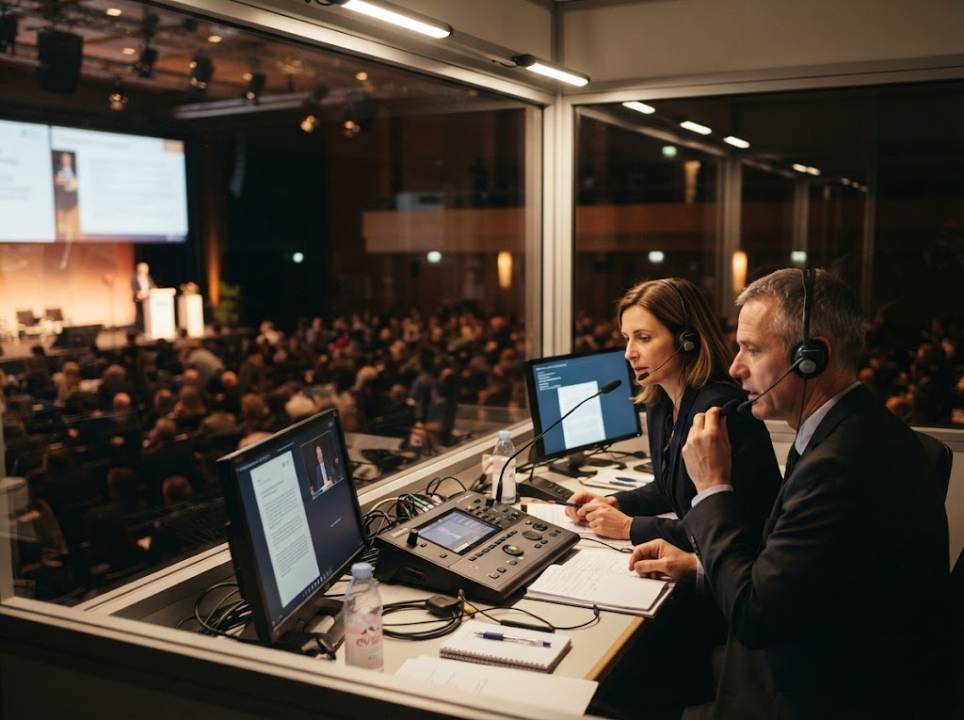
- Simultaneous interpreting: the interpreter speaks almost at the same time as the speaker, usually from a soundproof booth with headsets. Standard for conferences and large events.
- Consecutive interpreting: the speaker pauses every few sentences and the interpreter renders the message. Common in meetings, interviews and court.
- Whispered interpreting: the interpreter sits beside one or two listeners and whispers simultaneously. Useful in small groups.
- Remote interpreting: by phone or video, ideal for short, urgent or geographically spread conversations.
Conferences and events
International conferences rely on teams of simultaneous interpreters working in pairs, swapping every 20 to 30 minutes because the mental effort is intense. Organisers need to plan booths, sound equipment, speaker materials and rehearsal time. Interpreters prepare by studying presentations, glossaries and speaker biographies in advance.
The International Association of Conference Interpreters (AIIC) publishes professional standards on working conditions, team sizes and preparation, which are a useful reference for event organisers.
Courts and legal settings
In courts, tribunals, police stations and solicitors' offices, interpreters must be accurate, neutral and familiar with legal procedure. Consecutive interpreting is most common, with whispered interpreting for defendants following proceedings. Every word can matter, so interpreters render everything, including hesitations and corrections.
Legal cases usually involve written documents as well. Contracts, statements and evidence often need legal translation services before or after a hearing. Coordinating interpreters and translators with a shared glossary keeps names and terms consistent across the whole case.
Healthcare
Medical interpreting is one of the most sensitive settings. Patients may be anxious, in pain or receiving difficult news. Interpreters must handle clinical terminology accurately while staying calm and compassionate. They also need to understand confidentiality rules and the boundaries of their role.
Hospitals often combine interpreting with written translation of discharge letters, consent forms and patient information. Specialist medical translation services ensure those documents are as accurate as the conversation that preceded them.
Business meetings and negotiations
For negotiations, site visits, audits and training sessions, consecutive or whispered interpreting works well. A good business interpreter understands the industry, adapts to the tone of the meeting and helps both sides communicate naturally. Briefing them on goals, sensitive topics and key terms makes a big difference.
Remote interpreting has grown fast
Video and telephone interpreting expanded rapidly in recent years. It is quick to arrange, cost-effective and gives access to rare languages that may not be available locally. It works best for shorter sessions with good audio and video quality. For long, emotional or highly technical sessions, on-site interpreting remains the gold standard.
How to book interpreters well
- Book early, especially for rare languages and conferences
- Specify the setting, mode and expected duration
- Share agendas, presentations and glossaries in advance
- Plan breaks, as interpreting is mentally demanding
- Check technical setup for remote sessions
Choosing a provider
Many organisations work with one provider for both interpreting and translation. An established translation company UK wide can supply interpreters across cities, arrange remote sessions and handle the related documents, all with consistent quality checks and confidentiality agreements.
Ask about interpreter qualifications, experience in your sector, vetting and security checks, cancellation policies and how quickly they can cover urgent requests.
What it costs
Interpreting is usually charged by the hour or half day, often with a minimum booking. Conference interpreting is priced per interpreter per day, plus equipment. Travel time and expenses may apply for on-site work. Remote interpreting is often billed per minute or in short blocks, which makes it efficient for brief conversations.
Being heard, being understood
Good interpreting is almost invisible. When it works, people forget there was a language barrier at all. They negotiate, testify, ask questions and make decisions as if they shared a language. Behind that ease is a skilled professional and careful planning. Booking the right interpreters is one of the simplest ways to make sure everyone in the room is truly heard.